Technical support
Expert engineering and technical support for all your exhaust after treatment needs.

Complete Exhaust Aftertreatment Solutions
DPF
DOC
SCR
Replacement Parts
DPF Recovery
Diagnostics
Technical Support
DPF Sales & Service Australia specialises in the supply, servicing and technical support of diesel exhaust aftertreatment systems for passenger vehicles, light commercial vehicles, trucks, transport fleets, mining equipment and heavy-duty applications.
We don’t just supply parts. We help our customers understand the system, identify the cause of the problem and select the right solution. From our Rhino Quality Parts range of replacement DPF, DOC and SCR components to professional DPF recovery, testing and technical assistance, we provide reliable and cost-effective exhaust aftertreatment solutions for Australian and New Zealand operating conditions.
QUALITY PARTS. TECHNICAL KNOWLEDGE. COMPLETE SUPPORT.
TECHNICAL SUPPORT
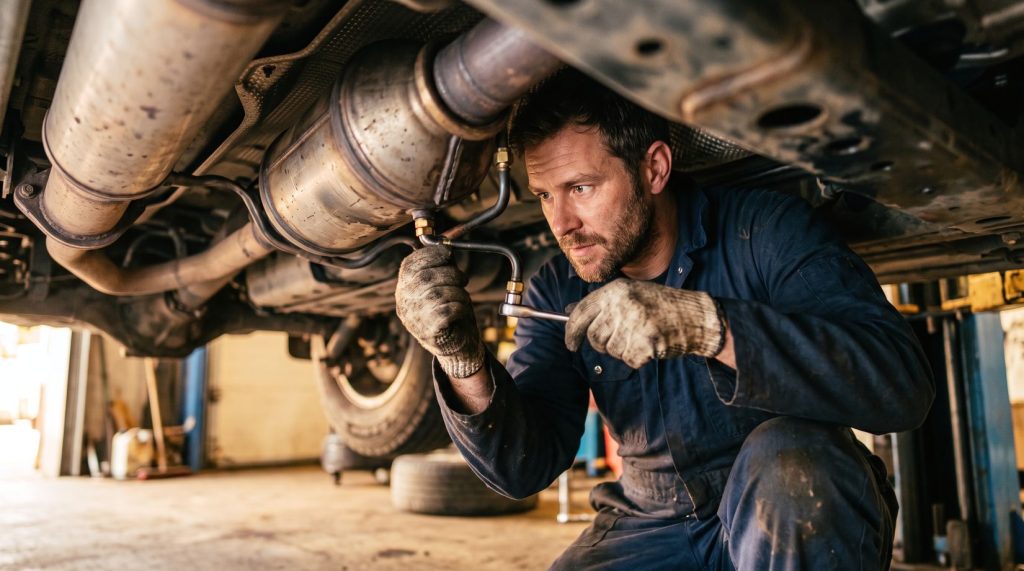
More Than Parts. Technical Support When You Need It.
One of the most important services we provide is the knowledge behind the product. Modern diesel exhaust aftertreatment systems integrate multiple components and operating strategies, so correctly diagnosing a DPF problem requires more than simply reading a fault code and replacing a filter.
Our team provides technical assistance to workshops, technicians, fleet operators and equipment maintenance teams, helping them better understand exhaust aftertreatment systems and make informed decisions when diagnosing and repairing issues.
WORKSHOP SUPPORT
Supporting Automotive
Diesel Workshops
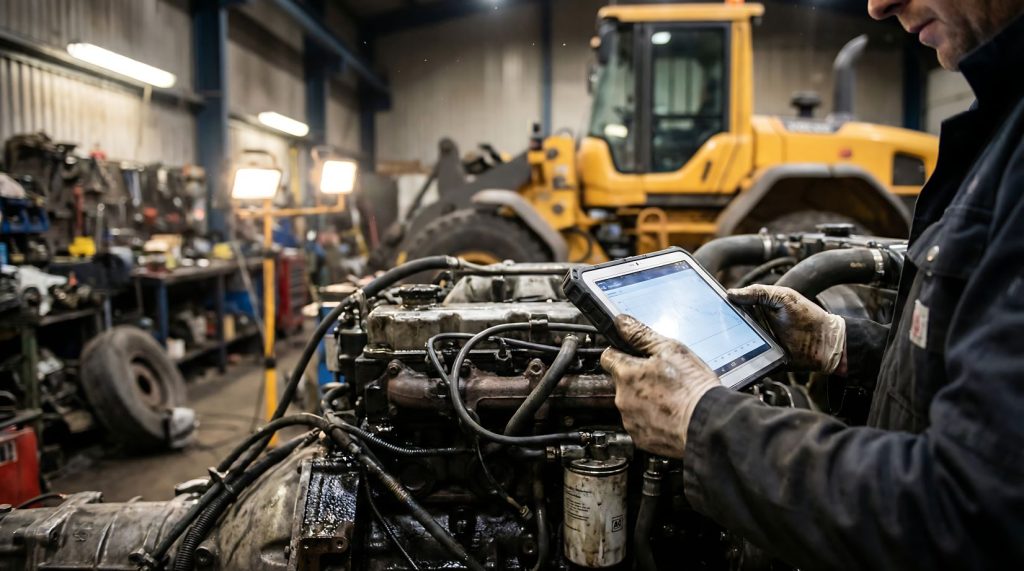
Supporting Automotive & Diesel Workshops
DPF Sales & Service Australia works with automotive workshops, diesel specialists and technicians throughout Australia and New Zealand. We understand the pressure workshops face when diagnosing modern emissions systems. The customer wants their vehicle back, the technician needs accurate information, and nobody wants to replace an expensive component unnecessarily.
Our combination of replacement products, DPF recovery, testing and technical support gives workshops access to a specialist exhaust aftertreatment resource when they need it.
Our goal is to help workshops fix the vehicle correctly, rather than simply replace a part.
Workshop Support Includes
- Part identification
- Application assistance
- DPF recovery
- Flow and back-pressure testing
- Replacement DPF, DOC and SCR components
- Installation information
- Diagnostic assistance
- Gaskets, clamps and associated components
- Technical support before and after the sale
Frequently asked questions
WHY IS MY VEHICLE EXHAUST BLOWING WHITE SMOKE?
Let us talk about white smoke coming from a diesel engine and what it can mean. White smoke occurs when diesel fuel is not reaching the temperatures required to burn in the combustion chamber causing the unburnt fuel to come through the exhaust intact in the form of white smoke. You will often notice a strong diesel smell also.
Typically, white smoke in modern diesel engines is caused from incomplete combustion. In a lot of cases, it does not necessarily mean it’s over fueling, in fact, it can be the opposite. The lack of fuel reaching the cylinders will also cause white smoke.
Another common cause of white smoke is catalyst poisoning.
Catalytic Poisoning is a term used for when a substance is deposited on the surface of a catalyst (DOC), or the substrate has been thermally compromised rendering the DOC performance inefficient.
The 3 main types of Catalytic Poisoning are:
- Substance – Deposited from Diesel, coolant or Oil
- Sulphur – Deposited from Diesel or Oil
- Thermal – From excessive heat within the DOC produced by excessive diesel, oil, incorrect fuel or a foreign substance entering the system
Similarly, white smoke will also occur if you have purchased an inferior, poor-quality DOC or DPF that has been manufactured without the correct composition or lack of, precious metal coatings on the substrates. If PM coatings are not OEM equivalent, the catalytic performance is diminished or inactive and as with poisoning, catalytic function is impaired causing white smoke.
I RECENTLY REPLACED A DPF, BUT THE SCAN TOOL IS STILL READING HIGH RESTIRCTION?
There are various possible reasons for this scenario.
- The DPF has blocked again prematurely because meticulous upstream diagnostics have not been performed to find the root cause of the original DPF failure. A DPF will block very quickly (within a few kms) if there are undiagnosed over-fueling or mechanical issues.
- Have you checked the exhaust after treatment system thoroughly for primary or secondary DOCs or SCR units? If a DPF is replaced and any DOCs or SCR on the system are not removed and serviced or tested, you will often have issues due to these substrates having high restrictions.
- Have you checked that the sensor pipes have been blown out and are not blocked with soot?
- Faulty differential pressure sensors.
- Has the vehicles ECU been reset to recognize the new DPF. If not, it will be holding the data / codes from the previous blocked / failed DPFs history.
First Questions to ask:
- What caused the DPF failure?
- What is my practical understanding of why the DPF failed?
- What is my logical diagnosis?
Do not blame the DPF, gather all the pieces of information first.
Do not rely solely on a scan tool to point you in the right direction.
A practical, hands-on and methodical diagnostic is always the key to a successful outcome when solving DPF problems.
“Use your grey matter, don’t rely on a scan tool.”
CAN YOU SERVICE / TEST AND REPAIR TRUCK SCR?
Yes, we have excellent outcomes with SCR Recovery. SCR models differ greatly depending on the make and model. Some are straight catalyst with AdBlue.
Other one box systems comprise DOC DPF and SCR and each cell requires removal, assessment and individual cleaning methods.
Often, the SCR restriction is due to AdBlue overdosing and crystalizing (hardening) in the substrate causing restriction. We have also found internal baffles or insulation have moved, further restricting flow which we can often repair.
If the unit is deemed serviceable, we can provide a quote.
Depending on the SCR unit and the work involved, this may be cost prohibitive and we would recommend replacement. OEM units are often very expensive, unavailable or availability is months away, so our recovery services are a good option for our customers
WHY IS THE NEW REPLACEMENT DPF SHOWING HIGH DIFFERENTIAL PRESSURE BUT THE OLD DPF ISN’T?
This is a common FAQ, often workshops just replace a DPF due to ongoing issues and because they have black or white smoke coming through the exhaust. If the DOC is not removed and checked for catalytic poisoning and/or cleaned or replaced when fitting a new DPF, the new unit will block again very quickly but the substrate will still be intact.
Then the mechanic fits the old DPF and there’s no restriction?
This is because the original DPFs substrate has already failed/cracked and the exhaust gases and soot are flowing straight through the filter, reducing restriction, hence reduced or no back pressure.